
Predictive Maintenance for Elevators: The Ultimate Algorithm Implementation Guide
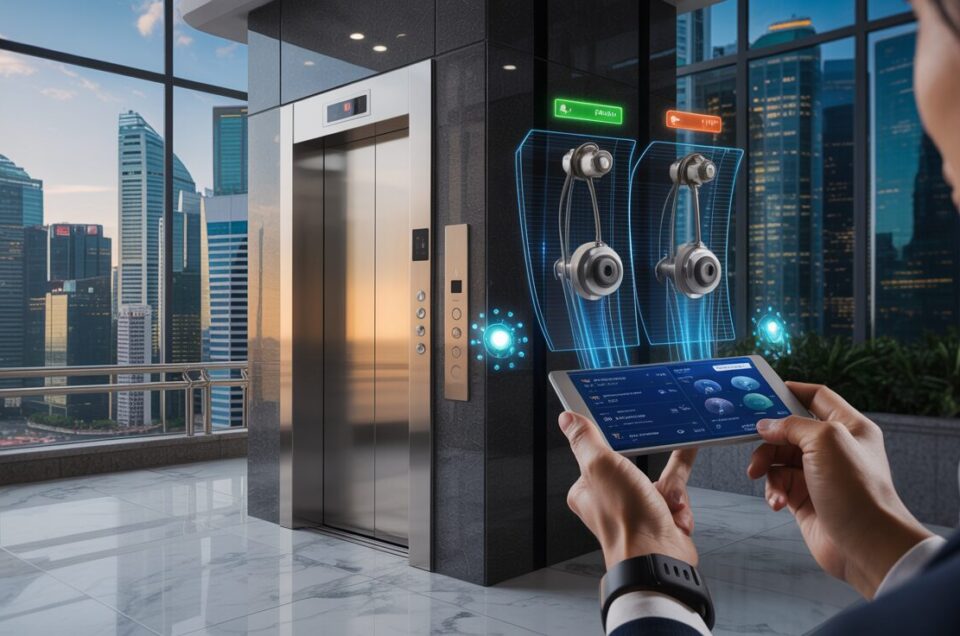
Table Of Contents
- Introduction
- Understanding Predictive Maintenance for Elevators
- Key Algorithms Powering Elevator Predictive Maintenance
- Implementation Roadmap for Real Estate Assets
- Building the Right Data Infrastructure
- Calculating ROI for Predictive Maintenance Implementation
- Case Studies: Success Stories in Commercial Real Estate
- Future Trends in Elevator Predictive Maintenance
- Conclusion
Introduction
In today’s technology-driven real estate market, property owners and REITs are increasingly leveraging advanced analytics to optimize building operations and enhance asset performance. Among these innovations, predictive maintenance algorithms for elevators stand out as a particularly high-impact investment. With vertical transportation playing a critical role in commercial buildings, unexpected elevator outages can significantly impact tenant satisfaction, operational costs, and property valuations.
The financial implications of elevator downtime are substantial—studies indicate that unplanned elevator outages can cost building owners between $2,000-$4,000 per incident when accounting for emergency service calls, parts replacement, tenant compensation, and reputational damage. For institutional investors managing large portfolios, these costs can quickly compound across multiple properties.
This comprehensive guide explores the transformative potential of predictive maintenance algorithms for elevators in institutional real estate portfolios. We’ll examine the core algorithms driving this technology, outline practical implementation strategies, and provide a framework for calculating return on investment. By the end, you’ll understand how these AI-powered systems are becoming essential components of forward-thinking real estate asset management strategies.
Elevator Predictive Maintenance
The Algorithm-Powered Revolution in Real Estate Operations
70%
Reduction in Unexpected Failures
25%
Lower Maintenance Costs
3-5
Years Extended Equipment Life
Key Algorithms Driving Predictive Maintenance
Classification Algorithms
- Random Forest
- Support Vector Machines
- Gradient Boosting
Time-Series Analysis
- ARIMA Models
- LSTM Networks
- Prophet
Anomaly Detection
- Isolation Forest
- One-Class SVM
- Autoencoders
Implementation Roadmap
Portfolio Assessment
Identify high-value properties where elevator downtime creates the greatest business impact.
Sensor Deployment
Install vibration, current, acoustic, temperature, and door performance sensors.
Data Integration
Establish operational baselines across 3-6 months of usage patterns.
Algorithm Training
Train selected algorithms with historical data and continuously refine predictions.
Maintenance Integration
Establish alert protocols and train maintenance teams to respond effectively.
ROI Snapshot: Mid-Size Office Tower
Implementation Cost
$180,000 ($30,000 per elevator)
Annual Benefit
$96,500
Payback Period
1.87 years
5-Year ROI
168%
Success Stories
Singapore Office Portfolio
Tokyo Mixed-Use Tower
Understanding Predictive Maintenance for Elevators
Predictive maintenance represents a significant evolution beyond traditional reactive and scheduled maintenance approaches. Unlike reactive maintenance (fixing problems after they occur) or preventive maintenance (performing routine service on a fixed schedule), predictive maintenance leverages real-time data analytics to forecast when equipment failure might occur. This approach allows maintenance to be scheduled precisely when needed—not too early (which wastes resources) and not too late (which risks failure).
For elevators specifically, predictive maintenance systems continuously monitor various components through sensors that track vibration patterns, motor current, door operation, travel times, temperature fluctuations, and acoustic signatures. These inputs create a comprehensive data stream that algorithms analyze to detect subtle changes that might indicate developing issues long before they trigger noticeable performance problems.
The core value proposition is compelling: studies by McKinsey suggest that predictive maintenance can reduce machine downtime by 30-50% and increase equipment lifespan by 20-40%. For elevator systems in particular, predictive maintenance has demonstrated the ability to:
- Reduce unexpected failures by up to 70%
- Decrease maintenance costs by 15-25%
- Extend equipment service life by 3-5 years
- Improve tenant satisfaction by ensuring consistent vertical transportation
For institutional real estate investors and REITs, these benefits translate directly to enhanced asset performance, improved tenant retention, and ultimately higher property valuations. As we’ll explore in the following sections, the algorithms powering these systems represent the intersection of data science and real estate operations expertise.
Key Algorithms Powering Elevator Predictive Maintenance
The effectiveness of any predictive maintenance system depends on the sophistication of its underlying algorithms. For elevator systems, three primary categories of algorithms drive the most successful implementations:
Machine Learning Classification Algorithms
Classification algorithms form the backbone of many elevator predictive maintenance systems. These algorithms analyze historical data to identify patterns associated with specific types of failures. The most widely implemented classification algorithms include:
Random Forest: This ensemble learning method constructs multiple decision trees during training and outputs the class that is the mode of the classes output by individual trees. In elevator maintenance, Random Forest excels at handling the multivariate nature of elevator operation data, where numerous sensor inputs must be processed simultaneously. Its ability to manage missing data points—common in real-world sensor deployments—makes it particularly valuable for commercial building applications.
Support Vector Machines (SVMs): SVMs construct hyperplanes in multidimensional space to separate different classes of data points. For elevator systems, SVMs are especially effective at distinguishing between normal operational variations and actual developing faults. They excel in situations where the boundary between normal operation and potential failure is subtle and complex.
Gradient Boosting Machines: These algorithms build models sequentially, with each new model correcting errors made by previous models. In elevator systems, GBMs are particularly effective for detecting complex failure modes that involve interactions between multiple components, such as the interplay between door mechanisms, motor performance, and control systems.
Time-Series Analysis Algorithms
Elevator performance generates rich time-series data that reveals patterns over hours, days, and months of operation. Specialized algorithms extract meaningful insights from these temporal patterns:
ARIMA (AutoRegressive Integrated Moving Average): This statistical model analyzes time-series data to extract meaningful statistics and identify trends. For elevator systems, ARIMA models excel at forecasting gradual deterioration patterns, such as the slow decline in motor efficiency or increasing door operation times over weeks or months.
LSTM (Long Short-Term Memory) Networks: These recurrent neural networks are designed to recognize patterns over extended time sequences. Their ability to maintain context over long periods makes them ideal for detecting subtle changes in elevator behavior that develop gradually. LSTM networks are particularly valuable for analyzing vibration signatures, where changes might be imperceptible in short time frames but become significant over longer periods.
Prophet: Developed by Facebook, Prophet is a procedure for forecasting time series data that handles seasonality and holiday effects. In elevator maintenance, Prophet excels at accommodating the variable usage patterns common in commercial buildings, where demand fluctuates based on time of day, day of week, and seasonal factors.
Anomaly Detection Algorithms
Sometimes the most critical insights come not from predicted patterns but from detecting unexpected deviations. Anomaly detection algorithms specialize in identifying outliers that may signal emerging problems:
Isolation Forest: This algorithm identifies anomalies by isolating observations, building a tree structure that partitions data points. For elevator systems, Isolation Forest efficiently detects unusual behavior patterns without requiring extensive training on failure examples, making it valuable for identifying novel failure modes not previously encountered.
One-Class SVM: This variation of Support Vector Machines is trained on normal operation data and identifies deviations from established patterns. In elevator maintenance, One-Class SVMs excel at creating a boundary around normal operational parameters and flagging when systems begin to operate outside those parameters.
Autoencoders: These neural networks are trained to reconstruct normal input data. When presented with anomalous data, the reconstruction error increases, signaling a potential issue. Autoencoders are particularly effective for elevator systems because they can process the high-dimensional data from multiple sensors simultaneously, identifying complex interactions that might indicate developing problems.
Implementation Roadmap for Real Estate Assets
Implementing predictive maintenance for elevators requires a strategic approach, particularly for institutional real estate portfolios. The following roadmap outlines key steps for successful deployment:
1. Portfolio Assessment and Prioritization
Begin by evaluating your entire portfolio to identify properties where elevator predictive maintenance will deliver the greatest ROI. Consider factors such as:
Building height and elevator dependency: High-rise properties where vertical transportation is critical typically offer the highest return on predictive maintenance investments. For buildings where elevator outages would severely impact tenant operations, the business case becomes particularly compelling.
Elevator age and condition: While predictive maintenance benefits both new and aging systems, the ROI calculation differs. Newer systems with modern control systems may be easier to integrate with predictive technologies, while older systems might have more frequent issues that predictive maintenance could prevent.
Tenant profile: Buildings with high-value tenants or where business operations would be significantly impacted by elevator outages (medical offices, hotels, luxury residential) should receive priority in the implementation sequence.
2. Technology Selection and Sensor Deployment
Once priority properties are identified, select appropriate technology platforms and deploy the necessary sensors. Modern implementations typically require:
Vibration sensors: Attached to key mechanical components to detect changes in operational signatures that might indicate developing issues in motors, bearings, or cables.
Current sensors: Monitor electrical consumption patterns to identify inefficiencies or abnormal power usage that often precedes mechanical failures.
Acoustic monitors: Capture sound signatures that can reveal issues like misaligned guide rails or deteriorating roller guides before they’re visibly apparent.
Temperature sensors: Track heat patterns in motors, controller boards, and machine rooms to identify components operating outside optimal ranges.
Door performance sensors: Monitor opening and closing times, which often provide early warning of developing mechanical issues.
3. Data Integration and Baseline Establishment
After sensor deployment, establish operational baselines by collecting data during normal operation across various usage conditions. This critical phase typically requires:
3-6 months of data collection across multiple seasons and usage patterns
Integration with building management systems (BMS) and computerized maintenance management systems (CMMS)
Development of building-specific performance profiles that account for unique characteristics of each elevator system
4. Algorithm Training and Refinement
With baseline data established, train the selected algorithms to recognize normal operations and detect developing anomalies. This process involves:
Initial algorithm training using historical data
Continuous refinement as new operational data becomes available
Validation through controlled testing and verification of algorithm predictions
Fine-tuning to minimize both false positives (unnecessary maintenance alerts) and false negatives (missed failure predictions)
5. Integration with Maintenance Operations
The final implementation step involves integrating the predictive system with maintenance workflows:
Establish alert protocols and priority levels for different types of predicted issues
Train maintenance teams to interpret and respond to predictive alerts
Create documentation systems to track prediction accuracy and system performance
Develop feedback loops where maintenance findings are used to further refine algorithm accuracy
Building the Right Data Infrastructure
The foundation of effective predictive maintenance is a robust data infrastructure that can capture, store, process, and analyze the substantial data streams generated by modern elevator systems. For institutional real estate portfolios, this infrastructure must be scalable across multiple properties while maintaining data security and integrity.
Key components of an effective elevator predictive maintenance data infrastructure include:
Edge Computing Capabilities: Modern implementations increasingly rely on edge computing—processing data near the source rather than transmitting everything to centralized servers. For elevator systems, edge computing enables real-time analysis of vibration patterns, acoustic signatures, and operational metrics. This approach reduces bandwidth requirements while enabling immediate response to critical anomalies.
Secure Cloud Storage: While edge computing handles immediate processing, secure cloud platforms provide the storage and computing power needed for deeper analysis across longer time periods. Cloud infrastructure enables portfolio-wide analysis, where patterns detected across multiple properties can inform maintenance strategies for the entire asset portfolio.
Data Transformation Pipeline: Raw sensor data must be transformed into formats suitable for algorithm consumption. This pipeline typically includes steps for filtering noise, normalizing values across different sensor types, and creating derived features that enhance algorithm performance.
API Integration Framework: The most effective predictive maintenance systems don’t operate in isolation. They integrate with other building systems through robust APIs. This integration might connect with:
- Building Management Systems (BMS) for holistic building performance monitoring
- Computerized Maintenance Management Systems (CMMS) for automatic work order generation
- Property Management Software for tenant communication and service tracking
- Portfolio Analytics Platforms for executive-level performance reporting
For real estate investment trusts and institutional owners, the data infrastructure should be designed with both current needs and future expandability in mind. Today’s investment in elevator predictive maintenance can become tomorrow’s foundation for comprehensive building intelligence systems that optimize all aspects of property performance.
Calculating ROI for Predictive Maintenance Implementation
For institutional real estate investors, the business case for predictive maintenance must be rooted in concrete financial returns. A comprehensive ROI calculation considers both direct cost savings and indirect benefits that impact asset valuation.
Direct Cost Factors
Begin by quantifying the direct financial impacts of implementing predictive maintenance:
Reduction in Emergency Service Calls: Emergency elevator service typically costs 3-5 times more than scheduled maintenance. Calculate the historical annual cost of emergency service multiplied by the expected reduction percentage (typically 60-75% for mature predictive systems).
Extended Equipment Lifespan: Major elevator modernization typically costs $100,000-$300,000 per elevator depending on building height and system complexity. If predictive maintenance extends equipment lifespan by 3-5 years, calculate the net present value of this deferred capital expenditure.
Reduced Parts Consumption: Predictive maintenance allows components to be replaced based on actual condition rather than fixed schedules. Industry data suggests parts consumption typically decreases by 15-25%, representing substantial savings for properties with multiple elevator banks.
Maintenance Labor Optimization: While predictive maintenance doesn’t eliminate the need for physical inspection and service, it does optimize when and where technicians spend their time. Calculate the value of reduced maintenance hours (typically 20-30% after full implementation).
Indirect Value Factors
Beyond direct cost savings, consider the significant indirect benefits:
Tenant Satisfaction and Retention: Elevator performance consistently ranks among the top factors in commercial tenant satisfaction surveys. Improved reliability translates to higher tenant retention rates, which significantly impact property NOI. Even a 5% improvement in retention can substantially increase asset value.
Reduced Tenant Concessions: Properties with documented elevator issues often must offer rent concessions or free rent periods to retain tenants experiencing service disruptions. Quantify historical concessions related to elevator performance that could be avoided.
Insurance Premium Impacts: Some commercial property insurers offer reduced premiums for buildings with documented predictive maintenance programs, recognizing the reduced risk profile these systems create.
ESG Reporting Benefits: For institutional investors with sustainability commitments, predictive maintenance contributes to reduced energy consumption and extended equipment lifecycles, both valuable metrics in ESG performance reporting.
Sample ROI Calculation
Consider a mid-size office tower with six elevators:
Implementation cost: $180,000 ($30,000 per elevator for sensors, software, and installation)
Annual subscription/monitoring: $18,000 ($3,000 per elevator)
Historical emergency service costs: $45,000 annually
Expected reduction in emergency calls: 70%
Annual emergency service savings: $31,500
Annual parts and maintenance labor savings: $25,000
Annual retention improvement value: $40,000 (based on reduced tenant turnover)
Total annual benefit: $96,500
Simple payback period: 1.87 years
Five-year ROI: 168% (excluding equipment lifespan extension)
Case Studies: Success Stories in Commercial Real Estate
Examining real-world implementations provides valuable context for understanding the practical impact of predictive maintenance algorithms in commercial real estate settings:
Singapore Office Portfolio Implementation
A leading Singapore-based REIT implemented elevator predictive maintenance across a 12-building office portfolio totaling 78 elevators. The system used a combination of vibration analysis and motor current signature analysis, processed through a machine learning platform that employed both Random Forest and LSTM algorithms.
Key outcomes after 24 months included:
- 74% reduction in unplanned elevator outages
- 62% reduction in tenant complaints related to elevator service
- Annual maintenance cost reduction of 22%
- Energy consumption reduction of 8% through optimized operation
The REIT reported that the system paid for itself within 14 months and has since expanded the implementation to its retail properties. Notably, the predictive system identified a developing gearbox issue in a high-rise property that would have caused a major failure requiring replacement of components with an 8-week lead time. Early detection allowed for planned maintenance during a low-impact weekend period.
Tokyo Mixed-Use Development
A 52-story mixed-use tower in Tokyo implemented an advanced predictive maintenance system for its 24 elevators and 16 escalators. The system employed edge computing devices that processed vibration and acoustic data locally before sending only relevant information to cloud servers for deeper analysis.
The implementation was notable for its integration with the building’s digital twin, allowing facility managers to visualize developing issues in a 3D model of the equipment. The system’s anomaly detection algorithms, primarily using Isolation Forest and Autoencoder networks, proved particularly effective at identifying unusual vibration patterns that indicated guide rail alignment issues before they affected ride quality.
After 36 months of operation, the property reported:
- Zero unplanned outages exceeding four hours (compared to seven such incidents in the previous three years)
- Maintenance labor reduction of 34% while improving overall equipment availability
- Extended modernization timeline by five years for 12 elevators, representing approximately $2.4 million in deferred capital expenditure
Sydney Multi-Building Hospital Campus
A healthcare REIT implemented predictive maintenance across a five-building hospital campus where elevator reliability was particularly critical for patient transport. The implementation featured extensive integration with the hospital’s operations systems, automatically adjusting maintenance schedules to avoid peak usage periods.
The system employed gradient boosting machines to classify potential failure types and prioritize issues based on operational impact. A unique feature of this implementation was the integration with staff workflow systems, which could automatically reroute patient transports away from elevators flagged for potential issues.
Results after 18 months included:
- 91% reduction in patient transport delays related to elevator availability
- Maintenance scheduling efficiency improvement of 42%
- Early detection of a critical controller issue that could have resulted in an entrapment
The hospital system’s facility director noted that the predictive maintenance system had become an essential part of their patient safety infrastructure, demonstrating how these technologies can transcend simple cost savings to become crucial operational components in specialized real estate assets.
Future Trends in Elevator Predictive Maintenance
As predictive maintenance technology continues to evolve, several emerging trends promise to further enhance the value proposition for real estate investors and property managers:
1. Integration with Digital Twins
The convergence of predictive maintenance with digital twin technology represents perhaps the most transformative development on the horizon. Digital twins—virtual replicas of physical assets that update in real-time—provide unprecedented visualization capabilities for maintenance teams. When integrated with predictive algorithms, these systems allow technicians to:
Visualize exactly where developing issues are occurring within complex mechanical systems
Simulate different intervention approaches before physical work begins
Create visual maintenance histories that enhance institutional knowledge retention
Early implementations of this integration are already demonstrating 15-20% improvements in first-time fix rates and significant reductions in diagnostic time.
2. Advanced Sensor Miniaturization
The next generation of predictive maintenance will benefit from increasingly sophisticated and miniaturized sensors that can be deployed more extensively throughout elevator systems. Developments include:
Wireless vibration sensors smaller than a postage stamp that can be placed on virtually any component
Integrated acoustic array microphones that can triangulate sound sources with centimeter-level precision
Low-power consumption sensors that can operate for years on a single battery or through energy harvesting from elevator motion
These advancements will enable more granular monitoring of elevator components while reducing installation complexity and cost.
3. Federated Learning Across Building Portfolios
As predictive maintenance deployments scale across large real estate portfolios, the opportunity to leverage federated learning—where algorithms improve by sharing insights without sharing raw data—becomes increasingly valuable. This approach allows:
Algorithms to learn from experiences across hundreds or thousands of elevators while maintaining data privacy
Rapid detection of emerging issues that might be rare in individual buildings but detectable across large portfolios
Continuous improvement of prediction accuracy without manual retraining
For REITs and institutional investors with diverse portfolios, federated learning represents a significant competitive advantage, as prediction accuracy improves with the scale of deployment.
4. Predictive Maintenance as a Service (PMaaS)
The complexity of implementing and maintaining predictive systems is giving rise to specialized PMaaS providers who offer end-to-end solutions. These services typically include:
Hardware installation and maintenance
Algorithm management and continuous improvement
24/7 monitoring and alert verification
Integration with existing maintenance contracts and service providers
Detailed performance reporting and ROI tracking
This service model is making advanced predictive maintenance accessible to a broader range of property owners who may lack in-house data science expertise.
Looking ahead, the most forward-thinking real estate investors are positioning elevator predictive maintenance not as a standalone technology but as a foundational component of comprehensive smart building strategies. As these systems integrate more deeply with other building systems—from access control to energy management—they will increasingly drive property valuation premiums in institutional real estate markets.
Conclusion
Predictive maintenance algorithms for elevators represent far more than just another technological advancement for real estate operators—they embody a fundamental shift in how institutional investors can approach asset management and operational excellence. By transforming elevator maintenance from a reactive necessity to a proactive strategy, these systems deliver measurable benefits that directly impact both operational performance and asset valuation.
The algorithms powering these systems—from machine learning classifiers to time-series analysis and anomaly detection models—continue to evolve in sophistication and accuracy. Implementation costs are decreasing while capabilities expand, creating an increasingly compelling business case for deployment across diverse real estate portfolios.
For forward-thinking real estate investment trusts and institutional owners, the question is no longer whether to implement predictive maintenance for vertical transportation systems, but rather how quickly they can deploy these technologies to gain competitive advantage. As we’ve seen through the case studies and ROI analysis, the financial benefits are substantial, with payback periods typically under two years and ongoing operational improvements that compound over time.
In an institutional real estate landscape increasingly defined by technological sophistication and operational excellence, predictive maintenance algorithms for elevators stand out as a high-impact investment that aligns perfectly with the dual mandates of enhancing tenant experience while optimizing financial performance. For investors focused on resilience, transparency, and technological advancement—the core values that define modern institutional-grade real estate—these systems represent not merely a maintenance upgrade but a strategic portfolio enhancement.
Ready to explore how predictive maintenance technology can enhance your real estate portfolio’s performance? Join us at REITX 2025, Asia Pacific’s premier institutional real estate investment summit, where industry leaders will share insights on implementation strategies and ROI optimization. View our scheduled sessions on property technology innovation, connect with leading speakers in the field, and discover exclusive SPONSORSHIP TIERS for technology providers. For more information, contact us today.


