
Hybrid Event Analytics: Combining On-Site & Virtual Data for Maximum Impact
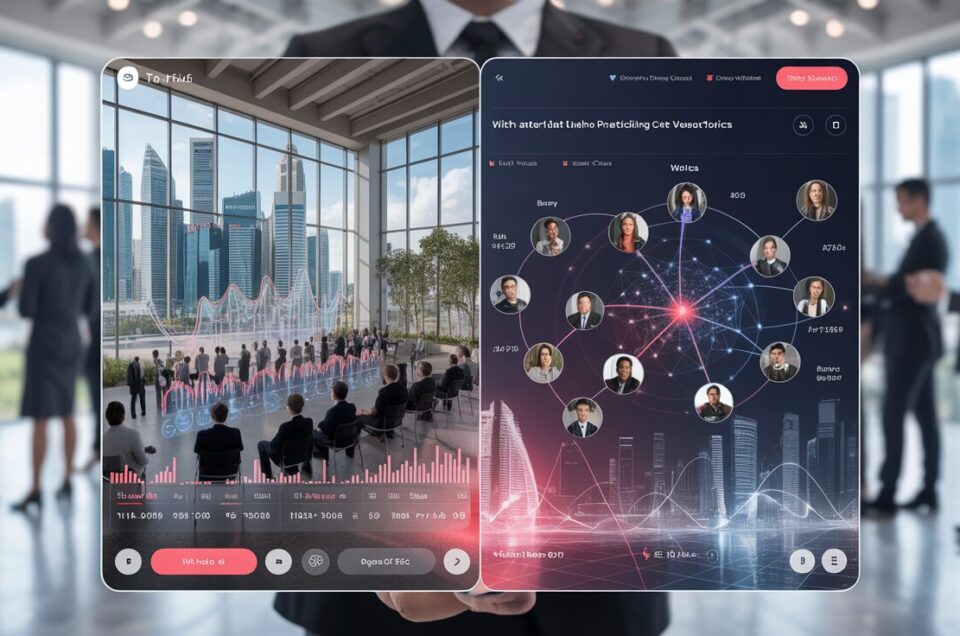
Table Of Contents
- Why Unified Analytics Matter for Hybrid Events
- Key Metrics to Track Across Both Environments
- Building Your Technology Infrastructure
- Data Integration Strategies That Work
- Analyzing Engagement Across Physical and Virtual Touchpoints
- Measuring ROI for Hybrid Event Formats
- Privacy and Data Compliance Considerations
- Turning Data Into Actionable Insights
The hybrid event landscape has fundamentally transformed how institutional summits, investment conferences, and industry gatherings create value for participants and sponsors alike. Yet despite the sophistication of today’s event platforms, most organizations struggle with a critical challenge: their on-site data and virtual data exist in separate silos, making it nearly impossible to understand the complete attendee journey or accurately measure event impact.
For institutional events like real estate investment summits, where networking value, thought leadership impact, and sponsor ROI drive strategic decisions, this fragmented view represents a significant missed opportunity. When physical attendance numbers can’t be reconciled with virtual engagement metrics, when networking connections made in-person aren’t tracked alongside digital interactions, and when content consumption patterns across both formats remain disconnected, event organizers lack the intelligence needed to optimize future experiences and demonstrate concrete value.
Hybrid event analytics solve this problem by creating a unified measurement framework that captures, integrates, and analyzes data from both physical and virtual environments. This comprehensive approach reveals patterns invisible to single-channel analysis—showing which session formats drive the most engagement regardless of attendance mode, identifying high-value participants across both environments, and providing sponsors with complete visibility into their reach and impact. As hybrid formats become the permanent standard for institutional gatherings, mastering this integrated analytics approach separates industry-leading events from those still operating with outdated measurement paradigms.
Why Unified Analytics Matter for Hybrid Events
The case for unified analytics extends far beyond simple reporting convenience. When institutional events operate with separate measurement systems for physical and virtual components, they fundamentally misunderstand their audience and misallocate resources. A REIT executive who attends keynote sessions virtually but participates in networking lounges physically appears as two different engagement profiles when data remains siloed. This fragmentation distorts every strategic decision that follows.
Complete attendee journey mapping becomes possible only when analytics systems track the same individual across both environments. This unified view reveals that your most engaged participants often blend attendance modes strategically—joining virtually for broad educational content while reserving physical attendance for high-value networking and targeted sessions. These behavioral insights inform everything from agenda design to sponsorship package construction, enabling event organizers to create experiences that acknowledge and optimize for how attendees actually consume content.
From a sponsor and exhibitor perspective, unified analytics transform the value proposition entirely. Traditional physical events measured booth visits and collected business cards, while virtual platforms tracked banner impressions and digital booth engagement. Neither metric told the complete story of sponsor impact. Integrated analytics reveal the full spectrum of sponsor touchpoints—showing how a virtual attendee who engaged with sponsored content later connected with that same sponsor’s representatives during in-person networking sessions. This comprehensive attribution model justifies premium sponsorship investments and guides sponsors toward the most effective engagement strategies.
The strategic planning advantages compound over time as unified data accumulates. Event organizers gain longitudinal insights into format preferences, engagement patterns, and content performance that single-channel analytics simply cannot provide. These insights drive continuous improvement cycles, where each iteration of your event becomes more precisely calibrated to participant needs and business objectives.
Key Metrics to Track Across Both Environments
Effective hybrid event analytics require a carefully selected metric framework that captures meaningful activity in both physical and virtual contexts while enabling apples-to-apples comparison. The metrics that matter most fall into several interconnected categories, each providing a different lens on event performance and attendee value.
Engagement Depth Metrics
Rather than simply counting attendance, engagement depth metrics measure the quality and intensity of participation across both formats. For virtual attendees, this includes session watch time, content completion rates, interactive feature usage (polls, Q&A, chat participation), and resource download activity. For physical attendees, comparable metrics include session dwell time (measured through beacon technology or check-in systems), networking interaction frequency, exhibition hall traffic patterns, and ancillary event participation. The key is establishing equivalency frameworks that recognize a 45-minute in-person panel discussion engagement as comparable to virtual attendees who watched the same content with active chat participation.
Network Connection Metrics
For institutional events like investment summits, networking value often exceeds educational content value. Unified analytics must therefore track connection formation across both environments with equal sophistication. Virtual networking metrics include scheduled one-on-one meetings, group discussion participation, connection requests sent and accepted, and direct messaging activity. Physical networking metrics encompass documented introductions, structured networking session participation, proximity-based interaction duration (via smart badges), and business card exchange volume. Advanced systems create unified contact graphs showing each attendee’s complete network expansion regardless of connection channel.
Content Performance Metrics
Understanding which sessions deliver the most value requires tracking engagement signals across delivery formats. Virtual sessions provide granular data including viewer retention curves, drop-off points, rewind frequency (indicating confusing or particularly valuable moments), and post-session survey completion. Physical sessions offer complementary signals through capacity utilization rates, standing-room indicators, post-session conversation clusters (observable through movement tracking), and evaluation form submission rates. Combining these data streams reveals content resonance independent of delivery mechanism.
Conversion and Business Impact Metrics
The ultimate measure of event success centers on business outcomes generated through attendance. These metrics include partnership discussions initiated, investment opportunities identified, deal pipeline additions, follow-up meetings scheduled (both during and post-event), and longer-term conversion tracking for qualified leads generated through event interactions. Unified analytics connect these outcomes to specific touchpoints across both physical and virtual journeys, enabling attribution modeling that reveals which event components drive actual business results.
Building Your Technology Infrastructure
Creating a unified analytics capability requires thoughtful technology architecture that bridges traditionally separate systems. The infrastructure decisions you make determine not just what data you can collect, but how effectively you can integrate, analyze, and act on that intelligence throughout the event lifecycle.
At the foundation sits your identity management system—the single source of truth that connects all touchpoints to individual attendees. This system must assign unique identifiers that persist across registration platforms, virtual event platforms, physical access control systems, mobile apps, and networking tools. Many organizations leverage customer data platforms (CDPs) or purpose-built event data warehouses that serve as the central repository where all event data converges. The critical requirement is real-time or near-real-time data ingestion, enabling live dashboards that inform operational decisions during the event itself.
Your virtual event platform selection fundamentally impacts analytics capabilities. Premium platforms provide robust APIs that expose granular engagement data including individual-level session viewing behavior, interaction timestamps, content downloads, and networking activities. When evaluating platforms, prioritize those offering comprehensive data export capabilities, real-time analytics dashboards, and integration partnerships with major CRM and marketing automation systems. The platform should track not just what content was accessed, but how attendees engaged with it—distinguishing passive viewing from active participation.
For physical event tracking, the technology landscape has evolved dramatically beyond simple registration counts. Modern solutions include smart badge systems that capture networking interactions through proximity detection, beacon networks that map attendee movement through venue spaces, session check-in applications that document attendance and duration, and integrated kiosk systems that log exhibition interactions. The sophistication level you deploy should match your event scale and analytics ambitions, but even mid-sized institutional events benefit tremendously from basic badge-based tracking that captures session attendance and structured networking participation.
The integration layer represents where most organizations encounter challenges. Purpose-built integration platforms or custom middleware solutions connect your various systems, normalize data formats, resolve identity across platforms, and route information to your central analytics repository. This layer handles the unglamorous but essential work of transforming raw data streams into unified, analysis-ready datasets. Investment in robust integration infrastructure pays dividends throughout your analytics program, reducing manual data manipulation and enabling automated reporting workflows.
Data Integration Strategies That Work
Technology infrastructure provides the capability for data integration, but strategic methodology determines whether that capability translates into actionable intelligence. Successful hybrid event analytics programs follow disciplined integration approaches that prioritize data quality, timeliness, and usability.
Begin with identity resolution as your cornerstone process. Every data point flowing from virtual and physical systems must connect to the correct individual attendee record. This requires establishing matching logic that accounts for registration variations (different email addresses for the same person, name variations, organizational affiliation changes) while maintaining data privacy standards. Leading organizations implement probabilistic matching algorithms that identify likely matches based on multiple attributes, flagging uncertain matches for manual review rather than creating duplicate profiles or incorrect associations.
Implement real-time data pipelines for operational analytics while maintaining batch processes for comprehensive analysis. During live events, stakeholders need immediate visibility into attendance patterns, engagement trends, and potential issues requiring intervention. Real-time dashboards drawing on continuously updated data streams enable this responsiveness. However, the most sophisticated analytical models—those examining cross-channel journey patterns, calculating lifetime engagement scores, or building predictive models—typically operate on carefully cleansed, normalized datasets processed through batch workflows following the event.
Establish data quality protocols that validate inputs at collection points rather than attempting to clean problematic data downstream. This includes standardizing registration fields across platforms, implementing validation rules that prevent common errors, and creating quality score metrics that flag incomplete or suspect records. For institutional events where attendee data feeds post-event CRM systems and drives follow-up activities, data quality directly impacts business development effectiveness.
Create unified taxonomies and classification schemes that apply consistently across both environments. Session categories, attendee segments, engagement level classifications, and content types should use identical definitions whether describing physical or virtual activities. This semantic consistency enables meaningful aggregation and comparison. When your analytics show that “executive panel discussions” drive 40% higher engagement than “technical deep-dives,” that insight has value only if those categories mean the same thing across both delivery formats.
Analyzing Engagement Across Physical and Virtual Touchpoints
With integrated data infrastructure in place, the analytical work of understanding attendee engagement across hybrid formats can begin. This analysis reveals patterns that inform everything from agenda design to marketing strategy, transforming raw data into strategic intelligence.
Engagement scoring models provide a framework for comparing participation quality regardless of attendance mode. These models assign point values to various activities—both virtual and physical—weighted according to their correlation with desired outcomes. A comprehensive scoring model might award points for session attendance (scaled by duration), networking interactions (weighted by interaction quality indicators), content downloads, post-event survey completion, and social media engagement. The resulting composite scores enable segmentation of your attendee population into engagement tiers, revealing your most and least engaged participants across both formats combined.
Sophisticated engagement analysis examines cross-format behavior patterns that reveal attendee preferences and strategies. Some participants maximize virtual attendance for educational content while concentrating their physical presence during networking-intensive segments. Others adopt the inverse approach, using virtual tools primarily for networking while attending keynote sessions in person. Understanding these patterns at the segment level—perhaps discovering that institutional investors favor one approach while service providers prefer another—enables personalized communication strategies and format optimization for specific audience segments.
Journey mapping across touchpoints visualizes the sequence and combination of interactions that characterize different attendee experiences. These maps might reveal that highly engaged attendees typically begin with virtual content consumption before the event, attend multiple in-person sessions, participate in structured networking, and continue engagement through virtual channels post-event. Lower-engagement participants might show entirely virtual attendance with minimal interaction. These journey patterns inform the design of engagement escalation strategies that guide attendees toward higher-value participation modes.
For events featuring speakers and thought leaders, engagement analysis should examine how individual presenters resonate across different formats. Some speakers may generate significantly higher engagement virtually due to strong presentation skills that translate well to camera, while others excel in physical environments where their interpersonal presence creates impact. These insights guide speaker selection and format assignment for future events, ensuring each presenter operates in the environment where they deliver maximum value.
Measuring ROI for Hybrid Event Formats
Return on investment measurement for hybrid events requires frameworks that acknowledge different cost structures and value creation mechanisms across physical and virtual components while providing unified metrics that stakeholders can evaluate holistically. The hybrid format introduces complexity, but also creates opportunities for more sophisticated value demonstration.
From an attendee ROI perspective, hybrid formats expand the value equation by offering flexibility that reduces travel costs and time investment while maintaining access to content and networking opportunities. Analytics that track attendee-reported ROI across format choices reveal how different participant segments perceive value. Post-event surveys should specifically query attendees about business outcomes generated through event participation—partnerships formed, insights gained, deals initiated—and correlate these outcomes with engagement patterns. This analysis often reveals that certain event components (executive roundtables, structured networking sessions, specific content tracks) drive disproportionate value relative to their cost or time requirements.
Sponsor and exhibitor ROI calculation becomes more comprehensive in hybrid environments, but also more complex. Traditional physical event metrics like booth visits and brochures distributed give way to unified engagement measurement that spans virtual booth visits, content downloads, networking meeting participation, and physical interaction documentation. Leading organizations provide sponsors with integrated dashboards showing their complete reach across both environments, lead quality scores based on engagement depth, and attribution tracking that connects sponsor touchpoints to qualified opportunities. For sponsorship tiers offering combinations of physical and virtual visibility, unified analytics justify premium pricing by demonstrating multiplicative rather than merely additive value.
The organizer’s financial ROI calculation must account for hybrid formats’ different cost dynamics. Virtual components carry lower marginal costs per attendee but require platform investments and production capabilities. Physical components incur venue, catering, and logistics expenses but often command premium pricing. Sophisticated ROI models segment costs and revenues by format, calculate contribution margins for each component, and analyze scenarios exploring optimal physical-to-virtual ratio given different pricing and attendance assumptions. These models guide strategic decisions about event format, capacity planning, and pricing strategy.
Lifetime value metrics extend ROI analysis beyond single events to examine how hybrid participation patterns predict ongoing engagement. Attendees who engage across both formats often show higher lifetime value—returning for subsequent events, upgrading to premium tiers, and generating referrals. Analytics that track cohort behavior over time reveal whether hybrid options expand your addressable audience by reducing participation barriers, or whether they cannibalize higher-value physical attendance. These insights are critical for long-term strategic planning as your event model evolves.
Privacy and Data Compliance Considerations
The comprehensive data collection underlying effective hybrid event analytics creates significant privacy and compliance responsibilities that require careful navigation, particularly for institutional events operating across multiple jurisdictions with varying regulatory frameworks.
Consent management must address both virtual and physical data collection with appropriate transparency and granularity. Attendees should understand what data you collect in each environment, how you intend to use it, with whom you may share it, and what rights they have regarding their information. Best practices include layered consent approaches where basic attendance and safety-related data collection operates under event terms and conditions, while more extensive behavioral tracking and marketing uses require explicit opt-in consent. Virtual platforms typically build consent mechanisms into their registration flows, but physical environments require equally robust processes—often implemented through registration systems or mobile apps that attendees use to access event features.
Data collection in physical environments deserves particular attention because the mechanisms may be less obvious to attendees. Smart badge systems that log proximity interactions, beacon networks that track movement patterns, and cameras capturing attendance in various venue areas all constitute personal data collection requiring disclosure and, in many jurisdictions, consent. Leading organizations provide clear communication about these systems through pre-event notifications, signage in tracked areas, and settings within event apps allowing attendees to control tracking preferences. The principle of data minimization applies—collect only information necessary for stated purposes, and implement technical controls that limit collection to essential data points.
Data retention and deletion policies should reflect both business requirements and regulatory obligations. While certain data (registration information, financial transactions) requires long-term retention, granular behavioral data may not. Establish retention schedules that archive detailed engagement data after it has served analytical purposes, typically within defined periods following events. Implement automated deletion workflows for attendees who exercise data deletion rights, ensuring these deletions propagate across all integrated systems rather than leaving orphaned records in disconnected platforms.
When sharing data with sponsors and partners, implement controls that ensure compliance and attendee expectations. Rather than providing sponsors with raw attendee data, many organizations offer controlled engagement mechanisms where sponsors can message attendees through the event platform (with appropriate opt-out mechanisms) or receive aggregated, anonymized analytics about engagement with their content and brand. When attendees explicitly consent to share contact information with specific sponsors—through booth visits, meeting bookings, or explicit permissions—document these consents and limit data sharing strictly to what was authorized.
Turning Data Into Actionable Insights
The ultimate measure of an analytics program’s success isn’t the sophistication of its data infrastructure or the elegance of its dashboards—it’s whether the insights generated drive better decisions and measurably improved outcomes. Transforming hybrid event data into actionable intelligence requires deliberate processes that connect analysis to decision workflows.
Establish insight activation protocols that define how different stakeholder groups access and apply analytics throughout the event lifecycle. Content teams should receive regular reports on session performance metrics that inform speaker selection and topic prioritization for future events. Marketing teams need attendee segment analysis revealing which messaging and channels drive highest-quality registrations. Sales and business development functions require lead scoring based on engagement patterns, prioritizing follow-up with attendees showing strong interest signals. Operations teams benefit from real-time dashboards during events that enable responsive adjustments to capacity, staffing, and logistics.
Predictive analytics capabilities elevate hybrid event intelligence from descriptive (what happened) to prescriptive (what should we do). Machine learning models trained on historical data can predict which registered attendees are most likely to actually attend, enabling more accurate capacity planning. Engagement prediction models identify attendees at risk of low participation, triggering proactive outreach that increases involvement. Content recommendation engines analyze individual attendee profiles and behavior to suggest sessions, networking opportunities, and resources likely to provide value—creating personalized experiences at scale.
Create feedback loops that accelerate learning by systematically testing hypotheses generated through analytics. If data suggests that certain session formats drive higher engagement, deliberately expand those formats in the next event iteration and measure the impact. When analytics reveal that specific attendee segments prefer particular participation modes, create targeted experiences for those segments and evaluate uptake. This experimental mindset, grounded in data-driven hypothesis formation, accelerates the evolution of your event model toward optimal configurations.
Develop benchmark frameworks that enable meaningful comparison across event iterations and against industry standards. Track core metrics consistently over time, creating trending analysis that reveals whether strategic initiatives are producing intended results. For institutional events like real estate investment summits, relevant benchmarks might include engagement rates by attendee type (investors, REITs, service providers), networking connection density, content satisfaction scores, and business outcome metrics like partnerships initiated. These benchmarks create accountability for continuous improvement and provide evidence of progress toward strategic objectives.
The most sophisticated organizations create data storytelling capabilities that translate complex analytics into compelling narratives accessible to non-technical stakeholders. Rather than presenting dense tables of metrics, develop visualization-rich reports that guide readers through key findings, highlight strategic implications, and recommend specific actions. These narratives might explore questions like “How do different attendee segments experience our event differently?” or “Which components of our program drive the highest ROI for different stakeholder groups?” The goal is making data accessible and actionable for decision-makers who may not have deep analytical backgrounds but whose choices shape event strategy.
Hybrid event analytics represent far more than a technical capability—they embody a strategic mindset that demands comprehensive measurement, unified understanding, and evidence-based decision-making. For institutional events operating at the intersection of physical and virtual experiences, the ability to capture, integrate, and analyze data across both environments separates industry leaders from organizations still operating with fragmented visibility into their attendee experiences and business impact.
The journey toward analytics maturity requires investment in technology infrastructure, commitment to data quality and governance, development of analytical capabilities, and cultivation of an organizational culture that values insight over intuition. Yet the returns on this investment compound rapidly as unified analytics enable increasingly sophisticated personalization, more effective resource allocation, improved stakeholder value, and accelerated strategic learning.
As hybrid formats establish themselves as the permanent standard for institutional gatherings, the competitive advantage increasingly accrues to organizations that master the complexity of multi-channel measurement. Those that develop robust analytics capabilities will continuously refine their event experiences, demonstrating clear ROI to sponsors and attendees alike, while competitors struggle to understand their fragmented data landscapes. The question facing event organizers isn’t whether to invest in unified hybrid analytics, but how quickly they can build the capabilities that will define excellence in the next generation of institutional events.
Experience Next-Generation Hybrid Event Excellence
REITX 2025 combines institutional-grade content, sophisticated networking, and cutting-edge event technology to deliver measurable value for Asia Pacific’s real estate investment community. Join us on November 27, 2025, at Singapore’s Sheraton Towers—whether in person or virtually—and experience how unified analytics create personalized, high-impact experiences.


