
Content Syndication Strategy: How to Transform One Keynote into 12 High-Value Assets
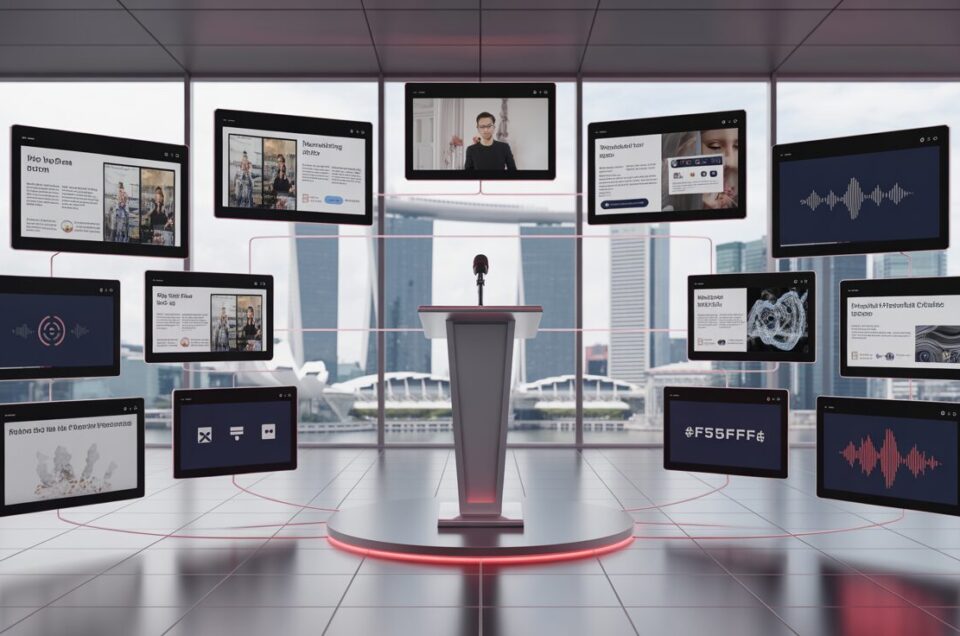
Table Of Contents
- Understanding Content Syndication for Premium Events
- Why Content Syndication Matters for Institutional Events
- The 12-Asset Framework: Maximizing Keynote Value
- Pre-Event Content Assets (1-4)
- Live Event Assets (5-7)
- Post-Event Assets (8-12)
- Strategic Distribution Channels for Institutional Audiences
- Measuring Content Syndication Impact
- How REITX 2025 Applies This Framework
When a prominent REIT CEO delivers a keynote address on tokenized real estate assets at a premium industry summit, that 45-minute presentation represents far more than a single moment in time. For sophisticated event organizers and forward-thinking institutions, it’s the foundation for a comprehensive content syndication strategy that extends thought leadership reach across months and multiple platforms.
Content syndication—the strategic republishing and repurposing of content across different channels and formats—has evolved from a basic marketing tactic into a critical component of institutional brand building and thought leadership positioning. Yet most organizations barely scratch the surface of what’s possible, publishing a video recording and perhaps a summary article before moving on to the next event.
The opportunity cost is substantial. A single well-executed keynote presentation contains the raw material for at least twelve distinct, high-value content assets, each serving different audience segments, consumption preferences, and stages of the stakeholder journey. This systematic approach to content multiplication doesn’t just increase visibility—it positions speakers and organizations as authoritative voices while maximizing the return on investment for event participation.
This guide reveals the strategic framework that leading institutional events use to transform keynote presentations into comprehensive content ecosystems. You’ll discover how to extract maximum value from speaker expertise, extend event impact beyond a single day, and build sustained thought leadership presence in your industry.
Understanding Content Syndication for Premium Events
Content syndication in the context of institutional events differs fundamentally from consumer-focused content marketing. Rather than chasing viral reach or maximizing click-through rates, the objective centers on establishing credibility with a highly specific audience of decision-makers, deepening relationships with existing stakeholders, and positioning both speakers and the event platform as essential industry resources.
Strategic content syndication involves the deliberate transformation of primary content—such as a keynote presentation—into multiple derivative formats, each optimized for specific distribution channels and audience preferences. This isn’t simply copying and pasting the same material across platforms. Instead, it requires thoughtful adaptation that preserves core insights while respecting the unique characteristics of each medium and audience context.
For institutional real estate events, this approach serves multiple stakeholders simultaneously. Speakers gain extended visibility and thought leadership positioning that extends well beyond the event date. Attendees receive valuable reference materials and additional perspectives on topics covered during sessions. Sponsors benefit from association with high-quality content that reaches their target audiences. And the event platform itself builds authority as a year-round industry resource rather than a single-day gathering.
The most sophisticated implementations create content ecosystems where each asset reinforces the others, driving audiences deeper into the material while establishing multiple touchpoints for engagement. A LinkedIn article might prompt a reader to watch the full keynote video, which includes a call-to-action to download a detailed white paper, which references upcoming panel discussions at the next summit.
Why Content Syndication Matters for Institutional Events
The economics of premium industry summits have evolved considerably over the past decade. As virtual attendance options proliferate and decision-makers face increasing time constraints, event organizers must demonstrate value that extends far beyond a single day of programming. Content syndication addresses this imperative by transforming events from ephemeral gatherings into enduring platforms for industry dialogue.
Extended thought leadership impact represents perhaps the most significant benefit. When a real estate technology executive presents insights on AI-powered portfolio optimization at a summit, the immediate audience might include 200 industry professionals. Through strategic content syndication, those same insights can reach thousands of stakeholders over subsequent months—fund managers reviewing the white paper, analysts watching the video excerpt, journalists citing the research in industry coverage, and investors discovering the content through search years later.
This multiplier effect transforms speaker participation from a one-time commitment into an ongoing marketing asset. For speakers, the return on their preparation time and intellectual contribution increases exponentially. For event organizers, it creates compelling value propositions when recruiting high-caliber presenters and justifying premium sponsorship investments.
Audience engagement beyond the event date solves another critical challenge in the event industry. Attendees struggle to absorb everything presented during intensive summit schedules. Syndicated content provides opportunities for deeper exploration of topics after returning to the office, when they have time to reflect and apply insights to their specific situations.
Furthermore, content syndication serves as powerful evidence of expertise and industry leadership when potential attendees evaluate whether to invest time and budget in future events. A robust library of valuable, publicly accessible content from previous summits demonstrates the caliber of insights and conversations they can expect, reducing perceived risk in the registration decision.
Search visibility and discoverability create compounding benefits over time. Each syndicated asset represents another opportunity for industry professionals to discover the event platform when researching relevant topics. A thoughtfully optimized article on blockchain-enabled REIT structures or ESG performance metrics can attract qualified prospects months or years after the original presentation, building a continuous pipeline of interested stakeholders.
The 12-Asset Framework: Maximizing Keynote Value
The transformation of a single keynote into twelve distinct assets follows a systematic approach organized around the event timeline. This framework ensures comprehensive coverage while maintaining strategic focus on the most valuable asset types for institutional audiences.
The twelve assets break down into three phases: pre-event content that builds anticipation and establishes context, live event assets that capture the presentation itself in multiple formats, and post-event derivatives that extend insights and maintain momentum. Each phase serves distinct strategic purposes while contributing to the overall content ecosystem.
This systematic approach offers several advantages over ad-hoc content creation. It enables advance planning and resource allocation, ensures consistent quality across all derivatives, creates clear accountability for content development teams, and maximizes efficiency by producing all assets from a single source material investment. The framework also provides a replicable process that can be applied across all keynotes and sessions at an event, scaling thought leadership impact systematically.
For REITX 2025, with its focus on innovation in institutional real estate—from tokenized assets to AI-powered analytics—this framework ensures that cutting-edge insights from industry leaders reach stakeholders through their preferred channels and formats, whether they’re commuting executives consuming audio content, analysts seeking detailed data, or investors scanning visual summaries.
Pre-Event Content Assets (1-4)
Pre-event content serves dual purposes: building anticipation among potential attendees while establishing the speaker’s expertise and the topic’s relevance. These assets begin circulating several weeks before the summit, creating awareness and driving registration momentum.
Asset 1: Speaker Interview Article
A comprehensive interview article positions the keynote speaker as a thought leader while previewing key themes they’ll address. This 1,200-1,500 word piece explores the speaker’s perspective on industry challenges, their approach to the keynote topic, and what attendees can expect to learn. For an executive discussing digital twins in real estate management, the interview might explore how their organization implemented the technology, lessons learned, and predictions for industry adoption.
The interview format allows speakers to establish credibility in their own voice while creating highly shareable content. It performs well on LinkedIn, where professional networks amplify reach, and provides substance for industry newsletter features. Strategic distribution to relevant trade publications extends visibility beyond the event’s immediate audience.
Asset 2: Teaser Video
A professionally produced 60-90 second video featuring the speaker introducing their keynote topic creates visual appeal and social media engagement. This asset works particularly well on LinkedIn and Twitter, where video content generates significantly higher engagement than text posts. The teaser should highlight the most compelling insight or provocative question the keynote will address, creating curiosity without revealing the full presentation.
For optimal impact, the video should be filmed in a professional setting, include dynamic b-roll footage relevant to the topic, and feature clear audio quality befitting institutional audiences. Subtitles ensure accessibility and enable silent viewing in social feeds.
Asset 3: Infographic Preview
A visually compelling infographic presenting key statistics, frameworks, or concepts from the upcoming keynote serves multiple distribution purposes. It functions as standalone content on social platforms, enriches the event website’s speaker page, supports email marketing campaigns, and provides easily digestible content for audiences who prefer visual learning.
For a keynote on green finance in real estate, the infographic might visualize the growth trajectory of sustainable building investments, map the relationship between ESG metrics and valuation premiums, or illustrate a decision framework for green financing options. The design should maintain brand consistency with event visual identity while ensuring clarity and professional polish appropriate for institutional audiences.
Asset 4: Thought Leadership LinkedIn Post
A substantive LinkedIn article or carousel post from the speaker’s account (800-1,000 words) explores a specific aspect of their keynote topic in depth. This asset leverages LinkedIn’s algorithm preference for native content while building the speaker’s personal brand. Unlike the interview article, which maintains a third-person perspective, this piece allows direct thought leadership in the speaker’s voice.
The post should provide genuine value—actionable insights, contrarian perspectives, or proprietary research findings—rather than simply promoting the upcoming presentation. However, it naturally concludes with an invitation to explore the topic further at the summit, including registration information and relevant event details.
Live Event Assets (5-7)
Assets created during and immediately after the live event capture the presentation’s full value while the content remains timely and contextual. These represent the core materials from which all subsequent derivatives will be developed.
Asset 5: Full Keynote Video Recording
The complete video recording of the keynote presentation forms the cornerstone asset from which numerous derivatives emerge. Professional multi-camera production values matter for institutional audiences—clear audio, well-framed shots of both speaker and presentation slides, and thoughtful editing that maintains engagement throughout.
This full recording serves multiple purposes: it becomes valuable on-demand content for registered attendees who couldn’t attend live or want to revisit specific sections, provides source material for creating shorter derivative videos, and offers potential sponsors valuable association opportunities through branded hosting or pre-roll placement. The video should be published on the event platform with appropriate chapters or timestamps enabling easy navigation to specific topics.
Asset 6: Professional Photography Set
High-quality photographs of the speaker during their presentation create versatile visual assets for multiple applications. Beyond documenting the event itself, these images support all subsequent content promotion, enrich speaker profiles and biographies, and provide social proof of the speaker’s industry presence.
The photography set should include variety: wide shots showing audience engagement, medium shots of the speaker at the podium, close-ups capturing animated moments, and detail shots of presentation materials or demonstrations. Professional editing ensures consistent quality and brand alignment across all images.
Asset 7: Live Social Media Coverage
Real-time social media posts during the keynote—including key quotes, slide images, and brief video clips—create immediate engagement and FOMO (fear of missing out) among those not in attendance. This live coverage also provides valuable content for attendees to share from their own accounts, multiplying reach through personal networks.
Effective live coverage requires dedicated resources: a team member assigned specifically to social media rather than attempting to split attention with other responsibilities. Key quotes should be verified for accuracy, images properly attributed, and all posts tagged appropriately to build discoverable event archives.
Post-Event Assets (8-12)
Post-event derivatives extend the keynote’s impact across weeks and months following the summit, maintaining engagement with attendees while attracting new audiences who couldn’t participate in the live event.
Asset 8: Comprehensive Summary Article
A detailed 1,500-2,000 word article synthesizing the keynote’s key insights serves as the definitive written reference for the presentation. This piece should be substantive enough to provide value to readers who didn’t attend while encouraging those who did to revisit and deepen their understanding.
For search optimization, the article should incorporate relevant keywords naturally—terms industry professionals use when researching the topic. For a REITX keynote on cross-border REIT listings, this might include phrases like “international real estate investment vehicles,” “multi-jurisdiction listing strategies,” or “cross-border regulatory frameworks.” The article links naturally to scheduled sessions at upcoming events exploring related topics.
Asset 9: Highlight Reel Video (3-5 minutes)
A condensed video extracting the most compelling moments from the full keynote serves audiences with limited time or those evaluating whether to invest 45 minutes in the complete recording. This edited version should maintain narrative coherence while focusing on the highest-impact insights.
Strategic placement of this highlight reel matters significantly. It performs well as native LinkedIn video content, embedded in summary articles, featured on event recap pages, and included in email campaigns to prospects considering future event attendance. The shorter format dramatically increases completion rates compared to full-length recordings.
Asset 10: Slide Deck with Speaker Notes
Publishing the presentation slide deck with accompanying speaker notes or annotations creates valuable reference material for attendees while serving those who prefer to consume content through review of visual materials. Platforms like SlideShare extend discoverability to professionals specifically seeking presentation-format content on relevant topics.
The annotated deck should provide sufficient context that readers can understand key points without having attended the live presentation. This might include expanded explanations of complex slides, definitions of technical terms, or additional data supporting presented arguments. Proper attribution and branding ensure the asset reflects well on both speaker and event platform.
Asset 11: Podcast Episode or Audio Extract
Converting keynote audio into a podcast episode or creating an audio-only version for platforms like Spotify addresses the growing preference for audio content consumption. Many executives and investors consume professional content during commutes, workouts, or while traveling—contexts where video isn’t practical.
For optimal podcast formatting, consider adding brief context-setting introduction and conclusion segments, potentially including follow-up commentary from the speaker or event host. This frames the content appropriately for audio-only consumption and provides opportunities to direct listeners toward related resources or upcoming events.
Asset 12: In-Depth White Paper
The most substantial derivative asset, a comprehensive white paper expands significantly on the keynote topic with additional research, case studies, data analysis, and actionable frameworks. This 3,000-5,000 word document serves as a lead generation tool, premium content offering, and definitive reference on the subject.
White papers work particularly well as gated content—requiring email registration for download—building the event’s prospect database for future marketing. However, for established events prioritizing thought leadership over lead generation, open access can maximize influence and position the platform as an essential industry resource. The white paper should acknowledge the keynote as its foundation while providing substantial additional value that justifies the longer format.
Strategic Distribution Channels for Institutional Audiences
Creating twelve high-quality assets delivers value only when paired with systematic distribution that reaches target audiences through their preferred channels. For institutional real estate audiences, certain platforms and approaches prove consistently effective.
LinkedIn represents the primary platform for reaching senior real estate professionals, institutional investors, and C-suite executives. Both organic posting and targeted sponsored content enable precise audience segmentation by job function, seniority, industry, and company size. Content performance on LinkedIn benefits from speaker participation—when presenters share derivatives from their personal accounts, their professional networks dramatically expand reach beyond the event’s immediate following.
Industry publications and trade media provide credibility through third-party validation while accessing established readership bases. Many specialized real estate investment publications welcome contributed articles from recognized experts, particularly following major industry events. Offering exclusive first publication rights to select derivatives can secure premium placement that would be difficult to achieve through paid advertising.
Email marketing to segmented lists ensures content reaches both previous attendees and qualified prospects. Rather than mass distribution, sophisticated segmentation delivers specific assets to audiences most likely to find them valuable. Decision-makers interested in technology innovation receive content on AI and digital twins, while those focused on sustainability get ESG and green finance materials.
The event website functions as the content hub where all assets ultimately reside, optimized for search discovery and organized intuitively for easy navigation. Proper technical implementation—structured data markup, optimized page titles and descriptions, fast load times, mobile responsiveness—ensures maximum search visibility when industry professionals research relevant topics months or years after content publication.
Partner and sponsor channels multiply distribution reach when sponsors share content through their own marketing channels. For sponsors, association with high-quality thought leadership content provides value to their audiences while reinforcing their industry expertise. Clear guidelines around branding, attribution, and call-to-action placement ensure sponsor distribution serves all stakeholders’ interests.
Measuring Content Syndication Impact
Sophisticated measurement approaches assess both immediate engagement metrics and longer-term strategic outcomes. For institutional events, meaningful measurement extends beyond vanity metrics like raw pageviews to focus on qualified engagement and business impact.
Audience quality indicators deserve priority attention. Are senior decision-makers from target organizations consuming the content? Time-on-page metrics, video completion rates, and white paper downloads provide insight into genuine engagement rather than superficial clicks. LinkedIn analytics reveal the seniority levels and company types of those viewing content, enabling assessment of audience alignment with event objectives.
Attribution to event registration and attendance connects content performance to business outcomes. Tracking systems that identify which content assets prospects consumed before registering reveal which derivatives most effectively drive conversion. This intelligence informs content development priorities for future events—doubling down on high-performing formats while reconsidering assets that generate engagement without driving strategic actions.
Search visibility and organic discovery compound over time as content libraries grow. Monthly tracking of keyword rankings for strategic terms, organic search traffic to content pages, and search-driven conversions demonstrates the long-term value of systematic content syndication. A well-executed program should show increasing organic traffic year-over-year as the content library expands and ages, building authoritative topical coverage.
Speaker and sponsor satisfaction represents another critical measurement dimension. Post-event surveys should assess whether speakers feel the content syndication program effectively amplified their thought leadership, and whether sponsors perceive value from content association opportunities. High satisfaction in these areas strengthens recruitment for future events while justifying continued investment in content production quality.
Media coverage and industry influence indicate whether syndicated content is shaping industry conversations. Tracking journalist references to published insights, citations in analyst reports, and mentions in industry forums reveals content impact beyond direct attribution. This reputational value, while harder to quantify, often matters most for premium events positioning themselves as industry-shaping platforms.
How REITX 2025 Applies This Framework
As Asia Pacific’s premier institutional real estate investment summit marks its 10th anniversary, REITX 2025 exemplifies systematic content syndication that extends event impact far beyond November 27 at Singapore’s Sheraton Towers. The summit’s focus on innovation-driven value—from tokenized assets and blockchain-enabled structures to AI-powered portfolios and digital twins—generates insights that remain relevant throughout the investment cycle.
Each keynote address and executive panel at REITX receives the twelve-asset treatment, ensuring that perspectives from REIT leaders, institutional investors, and real estate strategists reach stakeholders across multiple channels and formats. A keynote on green finance and ESG leadership, for instance, becomes a comprehensive content ecosystem: pre-event interviews build anticipation among sustainability-focused investors, live video captures nuanced insights on regulatory frameworks, post-event white papers provide detailed implementation guidance, and podcast episodes enable consumption by time-constrained executives.
This systematic approach serves REITX’s diverse stakeholder groups effectively. Institutional investors who couldn’t attend in person access full insights through comprehensive articles and white papers. Technology vendors exploring sponsorship opportunities evaluate content quality as evidence of audience caliber. Journalists covering Asia’s evolving REIT landscape find quotable insights and data supporting their reporting. And potential speakers considering future participation see the thought leadership amplification their involvement would receive.
The integration of content syndication with REITX Best Of The Breeds Awards 2025 creates additional content opportunities. Award winner profiles, category analysis articles, and video features celebrating excellence in strategic transformation, digital innovation, and ESG leadership extend recognition value while providing aspirational content for organizations benchmarking their own performance against institutional-grade standards.
For professionals exploring speakers presenting at the summit or reviewing the full agenda of scheduled sessions, the content library demonstrates the depth of insights and caliber of dialogue they can expect. This transparency reduces registration friction while setting clear expectations about event value.
Organizations considering SPONSORSHIP TIERS for REITX 2025 gain clarity on content association opportunities—how their brand can align with high-quality thought leadership that reaches decision-makers throughout the year, not just during the single-day event. This positions sponsorship as a sustained marketing investment rather than event-day visibility alone.
The transformation of a single keynote presentation into twelve strategic content assets represents far more than efficient resource utilization. It’s a systematic approach to thought leadership amplification that serves the evolving needs of institutional audiences while addressing the economic realities of premium event production.
As industry summits compete for the attention and attendance of time-constrained senior executives, demonstrating value beyond a single day of programming becomes essential. Content syndication provides that extended value—turning events into year-round platforms for industry dialogue, establishing speakers as enduring thought leaders rather than one-time presenters, and creating multiple pathways for stakeholder engagement.
The framework outlined here—four pre-event assets building anticipation, three live assets capturing the presentation, and five post-event derivatives extending impact—offers a replicable process applicable across all sessions at an event. This systematic approach enables advance planning, ensures consistent quality, and maximizes return on the substantial investment required to convene industry leaders and produce premium content.
For institutional real estate events like REITX 2025, where topics span tokenized assets, blockchain structures, AI-powered analytics, and ESG frameworks, comprehensive content syndication ensures cutting-edge insights reach stakeholders through their preferred channels. It transforms a single day at Singapore’s Sheraton Towers into months of valuable industry dialogue, positioning the summit as an essential resource for anyone navigating innovation in Asia Pacific’s dynamic real estate investment landscape.
The question for event organizers and speakers is no longer whether to implement content syndication, but how systematically and strategically to execute it. The twelve-asset framework provides a proven starting point, ready for customization based on specific audience needs, topic characteristics, and organizational capabilities.
Experience Thought Leadership in Action at REITX 2025
Join Asia Pacific’s premier institutional real estate investment summit on November 27, 2025, at Singapore’s Sheraton Towers. Engage with keynote insights on tokenized assets, AI-powered portfolios, green finance, and blockchain-enabled structures that are reshaping the built environment.


